
Supply Chain Anxiety and Omnichannel Pushes
Supply chain anxiety meets omnichannel ambition as Canadian businesses brace for U.S. tariffs and court local suppliers
The StatCan numbers are bleak — and they tell only part of the story. More than a third of Canadian businesses now expect U.S. tariffs to ding their operations over the next year, and many are already passing those higher costs on to shoppers. What the data doesn’t capture is the quiet scramble happening inside corporate boardrooms, where nobody is waiting for Ottawa or Washington to make things easier.
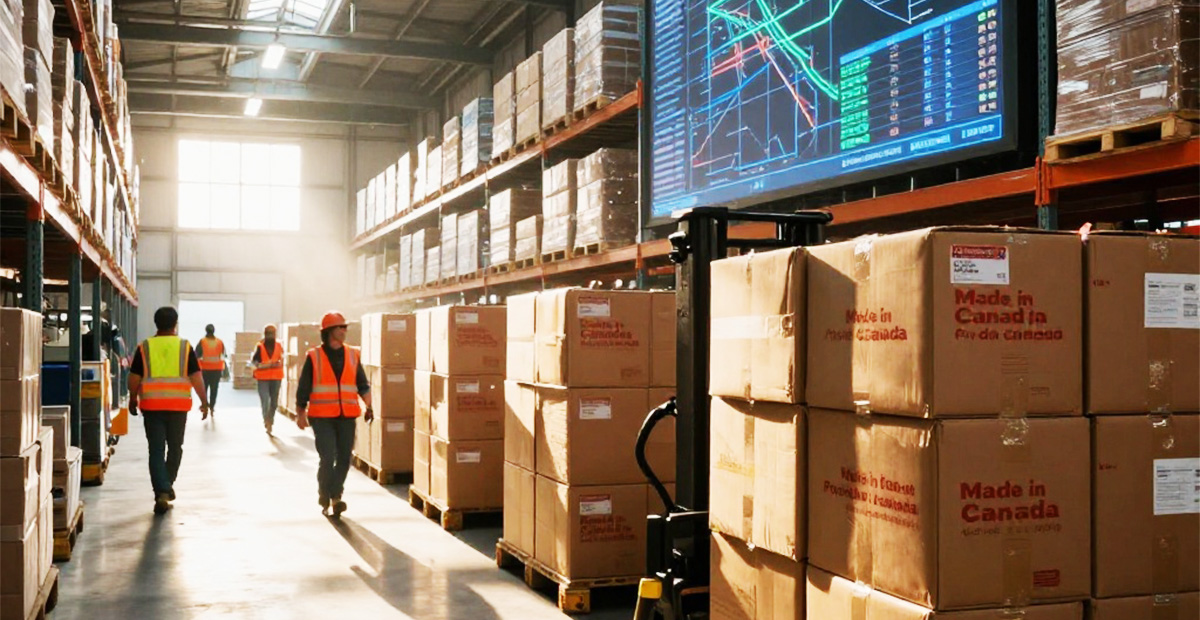
Walmart Canada picked this moment to hold its second annual Growth Summit, an event that dangles a “Golden Ticket” in front of small and medium-sized Canadian businesses: pitch your Made-in-Canada goods to our buying teams, and you might just land on our shelves and marketplace. Chief merchandising officer Russ Mounce called it a chance for “the next great Canadian success story,” and set the summit for June 23 in Mississauga. You can hear the marketing drumbeat, but you can also see a retailer hedging against tariff chaos by lining up local suppliers fast.

Tariff costs and business anxiety
The Canadian Survey on Business Conditions, fielded from April 1 to May 6, 2026, shows that cost anxiety has climbed sharply. 64.3% of businesses now expect obstacles over the next three months, up from 58.9% a quarter earlier. Inflation remains the top worry, with 48.8% citing it, and the pain is most acute in accommodation and food services (65.9%), retail trade (60.0%), and manufacturing (58.2%). Input costs — labour, raw materials, energy — are pinching 28.4% overall, but that figure soars to 60.0% in agriculture, forestry, fishing and hunting, and 48.1% in manufacturing.
When the survey explicitly asked about the impact of U.S. tariffs on Canadian imports, 34.0% of all businesses expected a negative effect over the next twelve months. That number jumped to 54.0% in manufacturing, 47.1% in wholesale trade, and 46.3% in the resource sector. A lot of people are bracing for a rough ride.
Consumers are already paying more
They aren’t waiting. 28.3% of businesses told Statistics Canada they had already passed tariff-driven cost increases onto customers in the preceding twelve months, and another 33.8% said they were very or somewhat likely to do the same over the coming year. That aligns with the sticky inflation reading: consumer prices rose 2.8% year over year in April, accelerating from 2.4% in March. The Raw Materials Price Index surged 31.6% over the same window, and wages kept climbing too — average hourly earnings were up 4.5%. The cost of living isn’t just a headline; it’s a receipt at the grocery check-out that’s getting longer every month.
And yet, optimism survives. Two-thirds of businesses (66.8%) described themselves as very or somewhat optimistic about the next year. That might be stubbornness or it might be the knowledge that if you’ve survived this long, you can probably weather a few more tariff rounds.
The hunt for Canadian-made goods intensifies
The survey picked up a modest shift toward domestic products. Over the previous year, 16.6% of businesses said they’d changed their marketing to promote Canadian goods, and 14.2% saw a sales bump, with retail trade (35.8%) leading the pack. That’s where Walmart’s Growth Summit fits in: it’s an omnichannel feeder system. Walmart’s reach spans more than 400 brick-and-mortar stores alongside a digital marketplace stocked with 130 million-plus items—a logistical advantage that lets the chain move goods through its system at speed. The marketplace division’s leader, Gauthier Dumoulin, points to that same advantage when discussing the company’s capabilities. The previous summit drew roughly 60 participating companies. Two companies emerged as winners from the pitch: Peacasa Snacks (known for its chickpea chips) and Noba Animal Co. (which makes cat furniture) both earned placement across Walmart’s retail network and e-commerce channels.. They say they’re serious about building this pipeline, and applications for this year’s summit close May 7.
I think the unspoken calculus is simple. Tariffs make cross-border supply chains unpredictable, so if you can fill shelf gaps with domestic stuff that consumers already want to buy, you do it. The patriotism is a bonus.
Omnichannel logistics and the AI experiment
The logistics here are genuinely complicated. Academic research in the journal Logistics earlier this year (Giannopoulos and Dasaklis) proposed a hierarchical reinforcement learning framework to help retailers with omnichannel supply chain shocks — the kind of shock that tariff volatility can produce. It’s not something a small entrepreneur needs to think about, but it explains why a big retailer invests in its own marketplace and fulfillment tools. You need a machine that can rebalance inventory across time zones and demand spikes, and sometimes AI actually helps.
In under two years, Canadian business uptake of AI has risen more than twofold. StatCan reports that close to one-fifth of companies now depend on it as part of their operations or customer-facing work. When businesses do adopt the technology, priorities cluster around three main areas: data analytics accounts for 36.6% of use cases, text analytics for 34.5%, and virtual agents or chatbots for 28.2%. But 40.0% of businesses said AI was not relevant to what they do, and 23.0% cited no barriers to adoption at all. In other words, AI is both a revolution and a shrug depending on who you ask. I suspect that among the companies filling out tariff anxiety surveys, the chatbot is the last thing on their minds.
The months ahead
The Bank of Canada’s next rate decision lands July 2, and rate relief might ease some debt-cost pressure. But the bigger story is whether these Golden Ticket summits will produce more than a few dozen feel-good shelf additions. If tariffs stay or escalate, the retailers that moved early will look smart. If trade tensions cool, the push for local sourcing might fade as quickly as it appeared. The real test is whether Walmart’s buyers actually place reorders with last year’s winners, or if those chickpea chips go quiet after one shipment. Nobody’s publishing that data yet.