The K-shaped shopping lifestyle
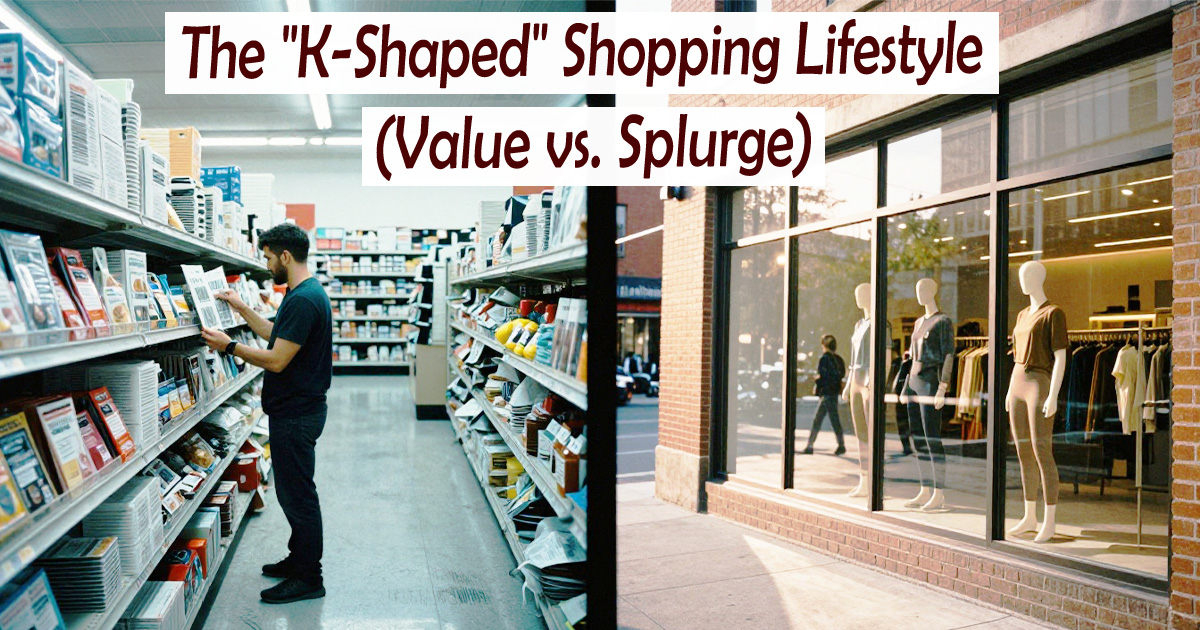
Canadians are shopping in split-screen. At No Frills, a cart full of President’s Choice pasta and Great Value cleaner. At Aritzia, a $128 pair of leggings, not an extravagance but a small, necessary reward. The two worlds are only a few blocks apart, sometimes the same person on the same day.
Economists call this a K-shaped recovery. Tidy term, two clean lines diverging. It’s less tidy on the ground. While higher-income households ride rising home values, middle- and lower-income families are grinding through a cost-of-living crisis that splits their budgets into two parts: bare-bones essentials and tiny symbolic luxuries. That split isn’t rational, it’s psychological. And it’s reshaping every aisle of Canadian retail.
Discount giants thrive
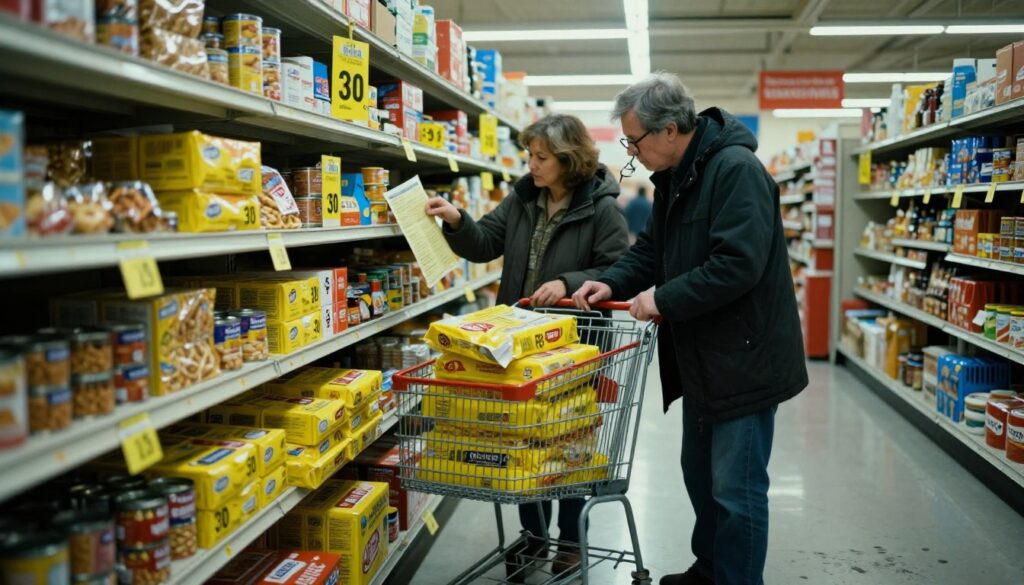
Dollarama’s foot traffic keeps climbing. The chain, with more than 1,500 stores from St. John’s to Victoria, has seen customer counts rise steadily through 2025 and into this year. Loblaw has been adding No Frills locations at a clip, betting the hard-discount format can pry shoppers away from full-service grocers. Walmart Canada reports that middle-income households who once avoided its aisles are now regulars.
“We’re seeing a trade-down effect that isn’t just about dollars and cents—it’s psychological,” says Sarah Mitchell, a retail analyst with Toronto-based Retail Insights. “It’s the careful reallocation of a household’s spending, where basics get squeezed so that a few meaningful treats can survive.”
The psychology is stark. Statistics Canada data shows grocery price inflation moderated but stayed at 2.3 per cent year-over-year in April. Meanwhile, credit card debt among Canadian households hit a record $119 billion in the final quarter of 2025, according to the federal Financial Consumer Agency of Canada. Shoppers are swapping brands easily now. Millennials and Gen Z have become hyper-efficient budgeters, scouring flyers and apps to cut $20 from the weekly grocery bill. A recent Kearney report calls them hyper-efficient. The savings aren’t hoarded, they’re redirected toward a few premium items in the same cart.
Selective splurging
The lipstick effect, that old recession trope where consumers treat themselves to small luxuries while cutting big spending, is alive and well in Canadian malls. Clothing and accessories sales rose 0.8 per cent in March, even as spending on furniture and appliances fell. Premium athletic and lifestyle brands are the beneficiaries.
Vancouver-based Lululemon and Aritzia both posted resilient earnings through 2025. Lululemon’s average selling prices haven’t budged; Aritzia’s clienteling model, built on stylist relationships, keeps customers returning when household budgets are strained. A $150 pair of trousers becomes an affordable signal that life hasn’t gone completely sideways.
That’s the wealth effect at work, says Michael Tremblay, an economist at the University of British Columbia’s Sauder School of Business. Homeowners who locked in cheap mortgages feel richer and spend accordingly. “Consumers are remarkably good at compartmentalizing,” he says. “They’ll buy no-name pasta sauce all month and then treat themselves to a high-end coffee, because psychological wellbeing is part of the household budget, too.” The Bank of Canada’s latest consumer survey confirms that spending intentions on discretionary goods remain positive, especially for households earning more than $100,000 a year.
The K-shaped divide
Housing wealth drives the split. In Toronto, Vancouver, and Montreal, homeowners who signed 2 per cent mortgages in 2020 have watched their property values balloon. That paper wealth makes a $148 Aritzia blouse feel like pocket change. Renters and mortgage renewers, facing rates around 5 or 6 per cent, are bleeding disposable income. The Canadian Bankers Association says mortgage delinquencies, while still low, ticked up in 2026 for the first time in three years. The divide isn’t a gentle K. It’s a fracture.
Mall operators see it in foot traffic. Premium zones in Cadillac Fairview and Ivanhoé Cambridge properties are bustling, while discount-anchored suburban power centres see longer dwell times as shoppers price-check behind half-empty carts.

Retailers adapt to a barbell market
The middle is collapsing. Loblaw operates No Frills for the bottom and City Market for the top; the conventional Loblaws banner is shrinking. Canadian Tire Corporation balances its value-hardware chain with SportChek and Mark’s, where private-label apparel can fetch fatter margins. The Kearney report calls this a “barbell”—heavy demand at both ends, a thinning middle. Those stuck in between, like mid-range department stores, are getting squeezed hardest.
Tariffs could make it worse. The Retail Council of Canada warns that if the cost of imported goods rises, margins will be pinched at both the value and premium ends. Discount stores rely on cheap imports for their shelves; premium brands rely on them for fabric. If the Bank of Canada’s expected rate cuts later in 2026 fail to reignite broader spending, the discount crowd will keep swelling and the middle will keep hollowing out.
The months ahead
Statistics Canada’s next inflation report lands in a week. Any upward tick in food prices will yank the thread on this whole contraption. The Bank of Canada’s rate decision follows on June 4. A hold, and the treat budget—that one pair of Lululemon tights per season—shrinks a little more. A cut might stretch the lipstick effect another quarter. But it won’t rebuild the middle.