Retailers Embrace Neighbourhood-Focused Formats and Luxury Destinations as Canada’s Shopping Landscape Evolves
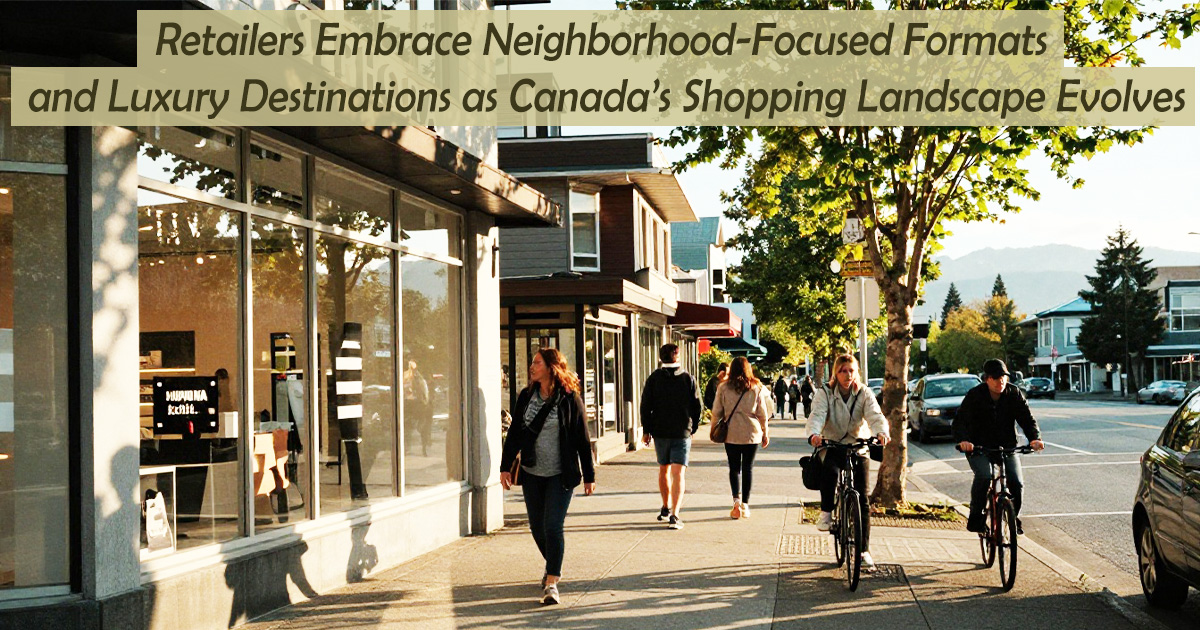
VANCOUVER — Sephora Canada opened a boutique in Kitsilano this week. It’s small. It sits on West 4th Avenue, not in a mall. The company calls it a deliberate shift. This is one of the clearest signals yet that global brands are betting on hyperlocal retail, planting stores in walkable neighbourhoods that used to get nothing but a drugstore.
The Kitsilano move doesn’t stand alone. Across the country, retailers are splitting their bets along two visible lines. Tiny community-embedded shops that become part of someone’s daily routine. and luxury mega-destinations that pull visitors from hundreds of kilometres away. Vancouver’s Oakridge Park, the colossal mixed-use project rising where the old Oakridge Centre stood, is the nation’s most-watched example of the latter, drawing marquee international brands before its first retail phase even opens.
Sephora tests a community-first model in Kitsilano
The Kitsilano boutique is a Canadian first for the beauty chain. Its product lineup wasn’t decided at head office. Local shopping data and direct community feedback shaped it, a spokesperson said. The store will host regular events and partner with nearby businesses. Advisors there aren’t trained to push quick demos like at a Robson Street flagship. They’re meant to give unhurried, personal consultations. The space itself (a fraction of the size of a Robson flagship, with a staff that knows the neighbourhood cold) feels more like a local secret than a chain outlet.
“We wanted to create a space where discovery feels personal and deeply tied to the people who actually live here,” the spokesperson said in a statement. “Kitsilano has a unique rhythm, and this format is built to fit into someone’s everyday routine — not just become a special trip once a season.”

The concept echoes a global pattern. From London to LA, retailers are testing small-format stores that embed in daily life. In Canada, the pandemic sharpened a taste for walkable local shopping and it stuck. Kitsilano, with its yoga studios, independent bookshops, and organic grocers, was an obvious choice. It’s a pilot. If it works, the company will roll similar boutiques into Leslieville, the Plateau, and Kensington. No timeline yet, but the model is being watched.
Oakridge Park draws luxury brands to Vancouver’s west side
At the other end of the spectrum, Oakridge Park is redefining ambition. The development, led by QuadReal Property Group, confirmed this week that three more high-end retailers (Nespresso, Max Mara, and Weekend Max Mara) have signed leases. They join a growing roster of premium names the developer has courted with promises of curated, experience-rich space.
When fully built, the project will house roughly one million square feet of retail, layered beneath residential towers, office buildings, a public library, and a performing arts centre. QuadReal is positioning the entire complex as a full-day destination rather than a conventional mall.
Plans include personal styling suites, product customization services, and in-store cafés, offerings meant to compete directly with Toronto’s Bloor Street West and Vancouver’s own Alberni Street luxury corridors.
“We are building a place where people will come not just to make a purchase but to experience the brand,” a QuadReal representative said. “Adding names like Max Mara signals that Oakridge will become a fashion anchor for the entire Pacific Northwest.”
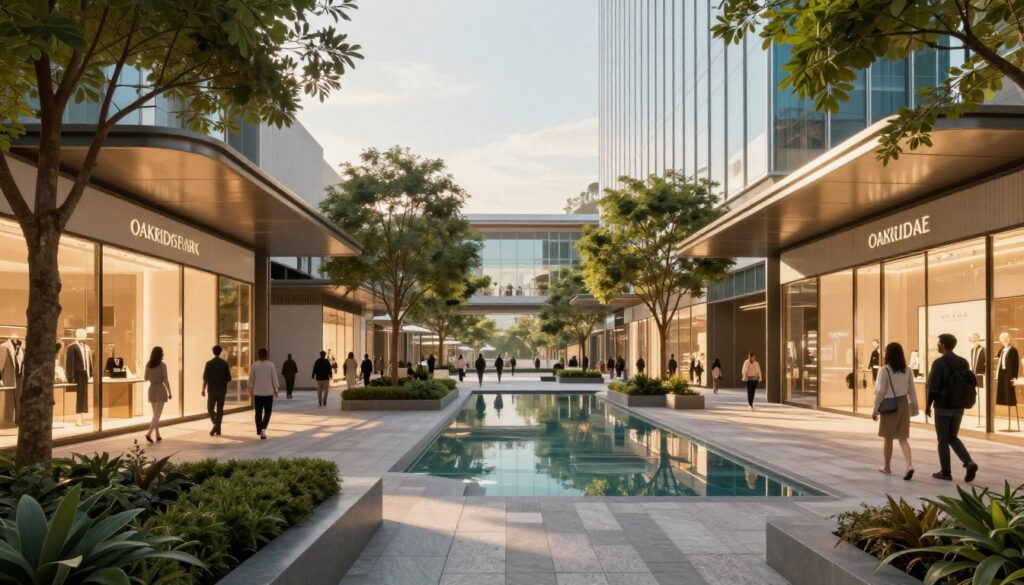
Retail Insider reported in early 2026 that Canada’s luxury market is entering a “more strategic era,” with global brands increasingly choosing to own and operate their Canadian flagships outright rather than relying on department store concessions. Oakridge, with its scale and controlled environment, is tailored to that shift. The first retail phase is expected to open in 2027, with further luxury announcements expected later this year.
A sector-wide move toward the experiential
The two Vancouver developments are part of a wider Canadian transformation. From Toronto’s Bloor-Yorkville strip to Montreal’s Sainte-Catherine Street West, retailers are investing in physical spaces that offer something beyond a straightforward transaction. Luxury flagships are adding art installations, rotating pop-ups, and exclusive product lines. Meanwhile, mainstream chains are experimenting with smaller neighbourhood stores that double as community hubs, a concept already proven by homegrown brands such as Lululemon and Aritzia in select locations.
The trend is aided by municipal planning. Cities across the country have loosened zoning over the past decade to approve mixed-use developments that weave ground-floor retail into residential streets. Vancouver’s Cambie Corridor Plan, which promotes walkable, transit-oriented communities, covers both the Oakridge and Kitsilano areas explicitly. That policy environment has cleared a path for luxury conglomerates and for companies like Sephora, owned by the French group LVMH.
Retail consultants caution that the models carry risk. Neighbourhood boutiques must calibrate local personality with brand consistency, while luxury destinations need a critical mass of high-spending visitors to justify commercial rents that have climbed sharply in major Canadian cities. But the pivot is necessary, not experimental.
What comes next
Sephora will watch the Kitsilano store through the rest of the year. Internally, neighbourhoods like Leslieville, the Plateau, and Kensington have been discussed as logical next steps. No formal timeline exists. At Oakridge, leasing momentum is expected to accelerate through 2026, and several flagship announcements from European and North American luxury houses are anticipated as the project moves toward its 2027 opening.
The development will test whether Vancouver, long treated as a secondary market for top-tier global brands behind Toronto, can support a luxury hub of this ambition and scale.
But right now, the Kitsilano store is the real test. It’s small. It sits on a street full of yoga pants. Its registers are ringing, or they’re not. That’s the question that matters.