
The Gordie Howe Bridge Showdown
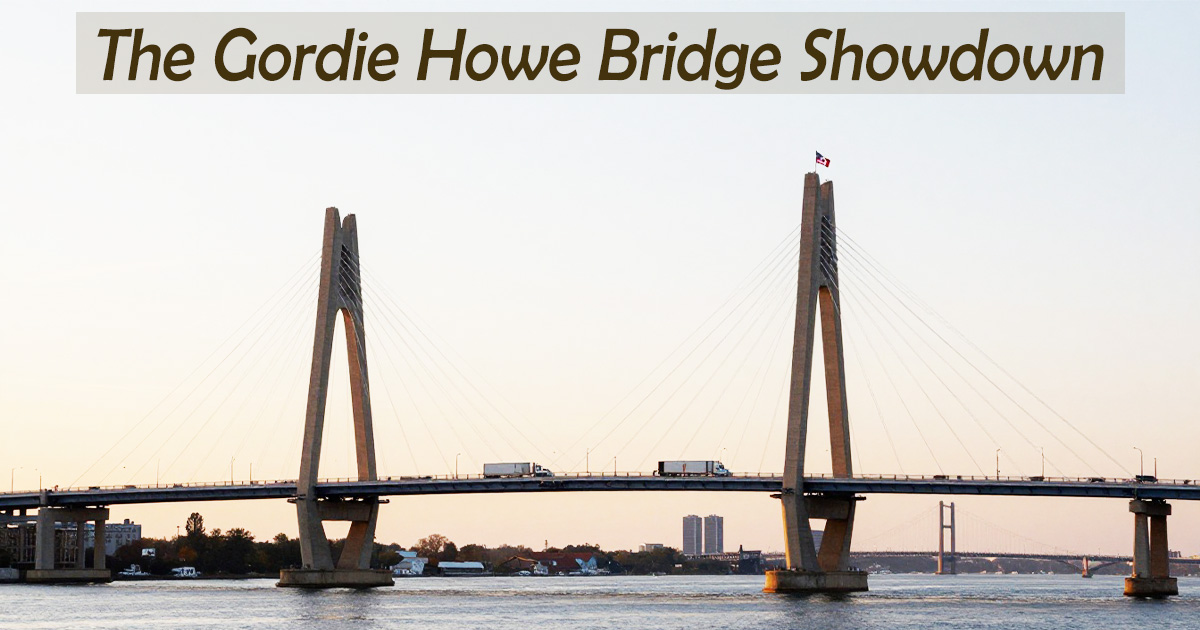
The Gordie Howe International Bridge — a $6.4‑billion cable‑stayed span across the Detroit River — is set to open to vehicles this week, Canadian officials confirmed Tuesday. That’s despite President Trump’s public opposition. And despite a quiet lobbying push from the owner of the other crossing.
The opening lands in the middle of a brittle stretch in Canada‑U.S. relations. Trump threatened to block the bridge in February. No formal obstruction materialized. His stance still hangs over a piece of infrastructure that Ottawa and Michigan jointly own and that Canadian taxpayers financed almost entirely. With freight ready to roll, the opening will be an immediate test of whether the two countries can keep trade flowing through something that was supposed to be a model of cooperation. Canada, at least, seems to be treating the presidential bluster as background noise.
A second crossing after decades of talk
The idea of a new publicly owned crossing between Windsor, Ont., and Detroit was first studied in the early 2000s. Both sides reached an agreement in 2012. Construction started in 2018. The bridge’s two A‑shaped towers, 220 metres tall and designed to evoke hockey sticks mid‑slapshot, were completed in 2023. The deck was joined in June 2024. By early 2026, the bridge was in final testing.
Canada’s federal government, through the Crown‑corporation Windsor‑Detroit Bridge Authority, financed the entire construction cost, pegged at $3.8 billion of a $5.7‑billion design‑build‑finance‑operate‑maintain contract. Tolls will repay that over 30 years. The bridge is held jointly by Canada and the state of Michigan. On the Detroit side, the crossing connects directly to Interstate 75; on the Ontario side, it links seamlessly to Highway 401 via the Rt. Hon. Herb Gray Parkway (opened 2015). Together, they give trucks unbroke motorway access between the two countries for the first time, bypassing the city‑street approaches that have long bedevilled the Ambassador Bridge.
Trump’s threat and the Moroun connection
On February 8, Trump publicly threatened to block the opening, citing Canada’s trade ties with China and calling the deal “one‑sided” because Canada would collect tolls. Prime Minister Carney phoned the next day to explain the joint ownership and the use of steel and workers from both countries. Whether that changed Trump’s mind was unclear.
Days later, the New York Times reported that Matthew Moroun, whose family owns the Ambassador Bridge and stands to lose a lot of truck traffic, had lobbied the administration before the threat was made. Filings later showed Moroun donated $1 million to MAGA Inc., a Trump‑affiliated super PAC, less than a month before the February 8 statement. The ranking member of the House Oversight Committee, Robert Garcia, opened an investigation into Commerce Secretary Howard Lutnick’s earlier meeting with Moroun, requesting all related communications.
The Ambassador Bridge quickly cut its own pre‑paid tolls from $10 to $5.50 for cars in a bid to compete.
Canada opens it anyway
Canada’s position never wavered. The WDBA, Transport Canada, and the U.S. Department of Homeland Security in February established the bridge as an official port of entry as of March 2. That cleared the last regulatory hurdle. CBSA and CBP staff are ready. A WDBA spokesperson said Tuesday, “The testing is complete, the systems are live, and we’re opening.”
On the Canadian side, the bridge includes a continuous pedestrian and cycling path over the river, free of tolls, linking trails in Essex County to Michigan’s Iron Belle Trail and the Great Lakes Way. The project also steered US$20 million into community benefits: park improvements, job training, and a $2.5‑million pier in Windsor’s Sandwich Town neighbourhood with First Nations interpretive elements. Walpole Island and Caldwell First Nations contributed murals to the bridge towers.
Trade, tolls, and a faster route
Roughly 25 per cent of U.S.–Canada merchandise trade by truck crosses at Detroit‑Windsor — about $500 million in goods every day, most of it auto parts. Windsor Mayor Drew Dilkens called the opening timing “dreadful” given the bilateral tensions, but added, “You cannot overstate how important this is for supply chains. Every auto plant from Oshawa to Kansas City depends on just‑in‑time parts crossing this river.”
The new tolls are less than half those of the Ambassador at full rate. A passenger vehicle pays $8 CAD (about US$5.75), dropping to $6 CAD with an electronic pass. Commercial trucks pay US$8.75 per axle. Analysts expect traffic to shift quickly, easing congestion.
Trump’s threat hasn’t been withdrawn. It just doesn’t seem to matter unless the White House finds a new legal lever. So far it hasn’t. The federal register entry stands. Customs officers are processing vehicles. The trucks will cross.
The opening and the unanswered questions
Canadian and U.S. officials hold a brief opening ceremony on the Windsor side this week. Michigan Governor Gretchen Whitmer and Canada’s Transport Minister attend; Prime Minister Carney, tied up in a tariff fight, will issue a statement but skip the event. Truckers and the roughly 5,000 Canadians who commute to Detroit are mapping the new route.
Moroun’s legal and political efforts are not over. The House committee’s inquiry into Lutnick’s meeting will keep the lobbying story alive. The committee hasn’t said when it’ll hear from Lutnick. And the trucks, barring a sudden reversal, will start moving anyway.