

Montreal’s Walter Cup win was a defensive stranglehold—and Ottawa never got a real chance
The Montreal Victoire won the Walter Cup on Wednesday night. It wasn’t close. A 4-0 demolition of the Ottawa Charge at Canadian Tire Centre delivered the franchise’s first PWHL championship and made them the first Canadian team to lift the trophy. Ann-Renée Desbiens posted a 23-save shutout that never really felt threatened. Abby Roque scored twice, and one of those was a shorthanded jailbreak goal that broke the game open. And captain Marie-Philip Poulin took home Ilana Kloss Playoff MVP honours after tying the postseason points record with eight. But what defined this game and this whole playoff run was Montreal’s defensive structure. Ottawa fired 23 shots, won a record 71.2% of faceoffs, and still generated almost nothing dangerous. That is not a fluke. That is the system.
The road to the title
Montreal had been close before. Semifinal exits, a 2025 finals loss—the scars were there. This roster learned from them. Head coach Kori Cheverie (the first woman to coach a PWHL champion) drilled a system that was, honestly, a bit boring to watch. Low-event defence, jump on turnovers. In the regular season, when the Victoire scored three or more they went 14-4-2-2. The playoffs were different: until the clincher, they’d been held to two or fewer goals in regulation. And yet they advanced. Because the defence simply suffocated teams. The breakthrough wasn’t more offence; it was a posture that gave up nothing.
Defensive blueprint
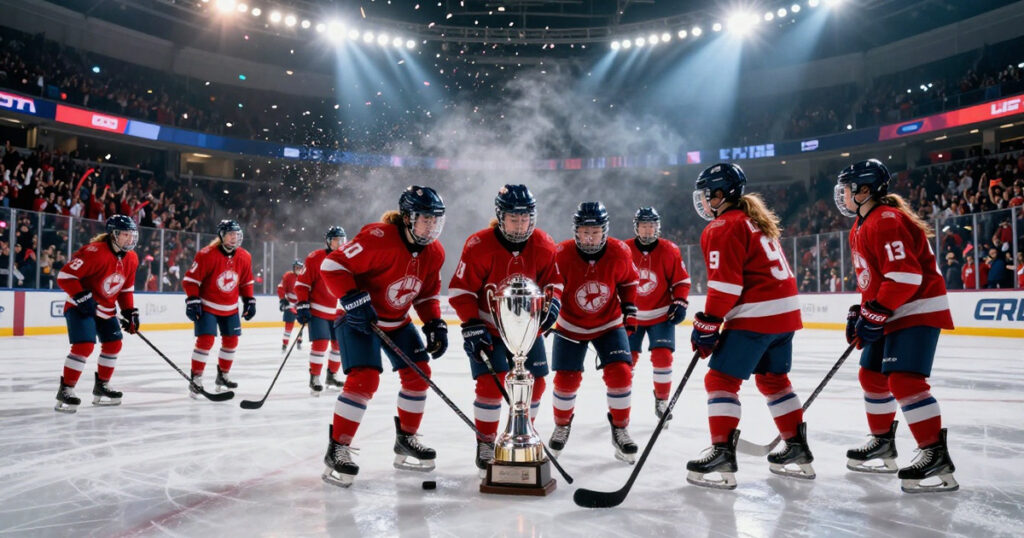
Ottawa outshot Montreal 23-16 in Game 4. That’s the only stat that flatters them. The Charge won 71.2% of faceoffs—a playoff record—and still generated fewer than a handful of high-danger chances all night. Because shots from the outside aren’t dangerous. Montreal’s defensive zone rotation—call it a low-box—kept everything to the perimeter.
Desbiens’ glove hand swallowed pucks. Her pads steered rebounds into the corners, where the defence could break out clean. The penalty kill was absurd: 25 kills in one postseason, a league record.
They didn’t just kill penalties; they attacked entries at the blue line, forced dump-and-chase plays that Desbiens, a superb puck-handler, turned into easy exits. The whole thing was a trap. Ottawa had the puck, they had the faceoff wins, they had the shot count, and they had zero Grade-A looks.
The jailbreak goal
The goal that killed the series came at 10:01 of the third period. Poulin was in the penalty box. Ottawa’s power play was 0-for-9 in the finals and this was their last chance to flip the game. A neutral-zone turnover ended that. Roque grabbed the puck, drove wide against a retreating defender, cut across the crease and tucked a backhand past Gwyneth Philips.
Fourth shorthanded goal in PWHL playoff history. The bench deflated. Montreal led 2-0 and they’d barely had the puck all night. The whole sequence was a clinic in what they do: don’t force anything, just wait for the opponent to crack. Ottawa’s power-play rush coverage was a mess; speed killed them.
Poulin’s MVP run and the depth that overwhelmed
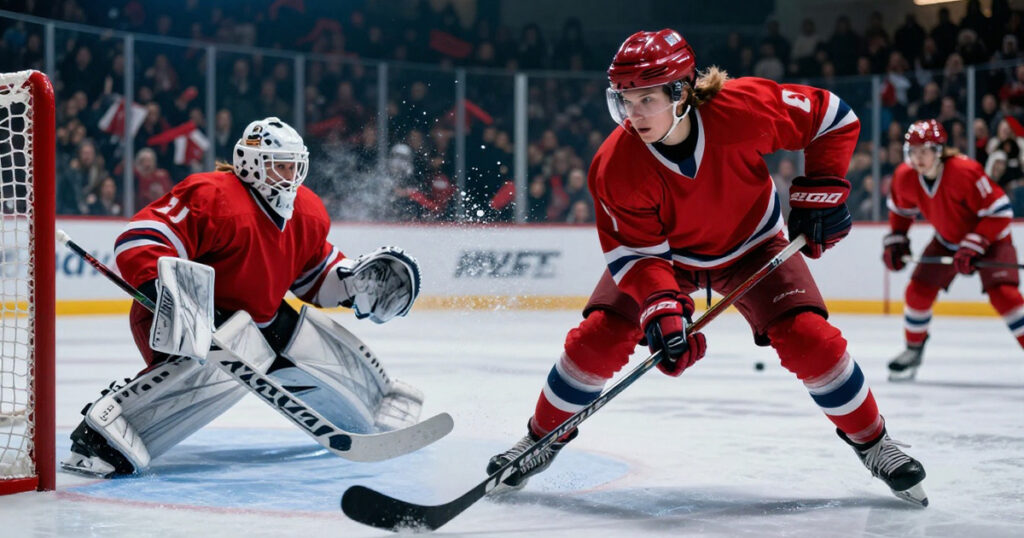
Poulin tied the postseason points record with eight. She earned it. On Montreal’s opening goal, she gathered a pass at centre ice, toe-dragged a defender and slipped a pass to Roque, the kind of patience that pulls apart a neutral-zone structure. But here’s the thing: the Victoire didn’t win because Poulin carried them. They won because they finally had a supporting cast that bit.
Roque matched Poulin’s eight points with four goals and four assists of her own. Laura Stacey had seven points. Six different defencemen chipped in a point. Stacey’s 28 shots on net tied Poulin for the playoff high, and her forecheck directly caused the turnover leading to that first goal. In a series where both teams went a combined 0-for-17 on the power play, Montreal just didn’t care. Even strength. Shorthanded. The goals came anyway.
What it means for an expanding league

The PWHL is sprinting to 12 teams next season. Detroit, Las Vegas, Hamilton, San Jose—the expansion adds four new markets, a signing window on June 2, a draft on June 17. The scheduling headaches that plagued these playoffs (back-to-backs, a postponed semifinal, a Canadiens overlap that crushed Game 1 attendance) will only get worse with cross-continent travel. Montreal’s title is a jolt for a Canadian market, and their defensive blueprint is something every expansion team should study. But that blueprint is about to be picked apart. Roque said it after the game: “It’s probably impossible” to keep the group together. The celebration is real, but the window is slamming shut.
What comes next
Cheverie’s staff has days to decide which pieces to protect. Desbiens and Poulin are obvious. The secondary scoring that won this championship? That’s going to get poached. Twenty-three Olympians are in the draft class. New teams will be aggressive. The Victoire just did what no Canadian team had done, and now the league is about to scatter their roster across the continent. The signing window opens June 2. That date is a guillotine.