The “Thrift Store Summer” Boom
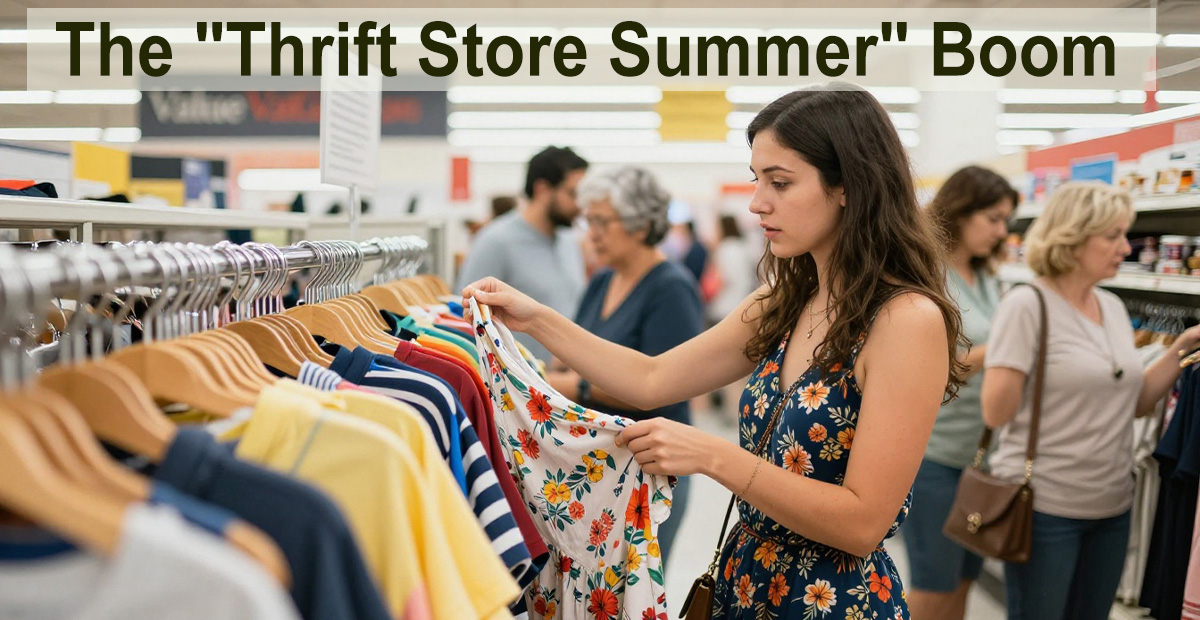
Thrift stores are having a moment. A TD Bank survey this week says 36 per cent of Canadians plan to buy second-hand goods in the coming months as grocery bills and fuel costs keep eating into household budgets. That isn’t a niche trend. It’s a wholesale repricing of summer leisure.
Eight in 10 respondents — 80 per cent — told the bank’s polling team that thrifting simply makes sense right now. The survey, which canvassed a representative sample of roughly 2,000 adults, found the shift cuts across income levels. High‑income professionals are in the mix, not just people stretched thin.
Emily Ross, a vice‑president with TD’s payments and loyalty division, described the change as significant. They’re clipping coupons. Redeeming loyalty points. And walking into a Value Village with the same intent their parents once brought to the Hudson’s Bay Company.
The loyalty‑programme figures are telling. Forty‑four per cent of Canadians say they’re leaning harder on points. The second‑hand marketplace — once confined to niche bargain‑hunters — is absorbing the spillover.
Economic pressures reshape spending
Grocery prices didn’t relent this spring. Staples — meat, dairy, vegetables — kept climbing, Statistics Canada reported. Gasoline prices crept upward in most provinces too, making those cottage weekends costlier.
For families in Toronto, Vancouver, and Montreal, where housing eats up a disproportionate share of take‑home pay, the cushion for discretionary spending has thinned. “People are saying, ‘I still want my kids to have what they need, but I’m going to do it differently,’” Ross said.
That different approach shows up in the ledgers. Value Village, with roughly 170 locations under parent company Savers Value Village Inc., reported a nearly nine per cent jump in quarterly sales. Company officials told investors the gains came partly from younger, higher‑income shoppers who treat second‑hand shopping as a treasure hunt for unique vintage items.
Thrifting as a pastime

The stigma that once clung to used clothing has largely evaporated. Sustainability gets some credit, but the real driver is the dopamine hit of finding a designer label for twelve dollars. Thrifting has become recreational, the line between necessity and entertainment blurred.
Social media platforms are full of Canadian “thrift hauls” and style tips that attract hundreds of thousands of views. The hashtag #ThriftStoreSummer, barely a blip in January, has become shorthand for a seasonal spending strategy. The TD numbers back that up: younger demographics, including those with post‑secondary degrees and above‑average household incomes, accounted for a disproportionate share of respondents who planned to buy second‑hand this summer.
Thrifting as a Pastime
The Thrift Store Summer Boom is changing the way people think about second-hand shopping. The stigma that once clung to used clothing has largely disappeared, and the Thrift Store Summer Boom is now being driven by excitement as much as necessity.
Sustainability deserves some credit, but for many shoppers, the real thrill comes from finding a designer label for twelve dollars or discovering a unique vintage piece hidden between ordinary racks.
What makes the Thrift Store Summer Boom especially interesting is how thrifting has evolved into entertainment. The line between saving money and enjoying a recreational shopping experience has become increasingly blurred. People are no longer visiting thrift stores only because they need affordable clothing. They are going because the experience itself feels rewarding, unpredictable, and fun.
Social media has accelerated the Thrift Store Summer Boom dramatically. Platforms like TikTok, Instagram, and YouTube are flooded with Canadian “thrift hauls,” styling videos, and budget fashion transformations that attract hundreds of thousands of views.
The hashtag #ThriftStoreSummer, barely noticeable at the start of the year, has now become a defining part of seasonal shopping culture. The TD survey numbers reinforce the strength of the Thrift Store Summer Boom, showing that younger demographics, including university graduates and above-average income earners, are among the most active second-hand shoppers this summer.
The Retail Landscape Adapts

The rapid growth of the Thrift Store Summer Boom is creating serious pressure for traditional retailers. When affluent shoppers willingly dig through Goodwill bins searching for hidden treasures, department stores in suburban malls begin losing an important share of summer spending.
Retail giants are already acknowledging the shift. Loblaw and Empire, the parent company of Sobeys and Safeway, have both noted during earnings calls that consumers are becoming far more price-conscious. The Thrift Store Summer Boom reflects a larger consumer mindset focused on discounts, promotions, and maximizing every dollar.
Fashion retailers face an even bigger challenge. Convincing shoppers to spend full price on a sundress becomes difficult when second-hand alternatives cost a fraction of the price while also carrying vintage appeal and individuality. Independent thrift stores are reporting the same pattern. Stories of professionals and high-income shoppers proudly showing off consignment-store finds no longer surprise anyone. That normalization is helping fuel the continued growth of the Thrift Store Summer Boom across Canada.
Secondhand Goes Mainstream As More Shoppers Turn To Thrift Stores And Online Resale
A Question of Staying Power
One of the biggest questions surrounding the Thrift Store Summer Boom is whether the trend will continue if inflation starts cooling. The Bank of Canada’s upcoming rate decisions could influence consumer spending habits in the months ahead.
Still, major thrift retailers are betting that the Thrift Store Summer Boom is more than a temporary reaction to rising costs. Value Village executives continue expanding aggressively into cities like Calgary, Ottawa, and Halifax. More importantly, they are intentionally targeting neighborhoods with above-average household incomes rather than focusing only on middle-income suburbs.
The next Calgary location will reportedly open in an area where the median household income exceeds $120,000. That kind of investment suggests retailers believe the Thrift Store Summer Boom has long-term staying power.
Whether consumers continue thrifting once grocery prices stabilize remains uncertain. But one thing is clear: second-hand shopping has already moved from niche behavior into mainstream culture, and the Thrift Store Summer Boom is reshaping the retail industry faster than many experts expected.