
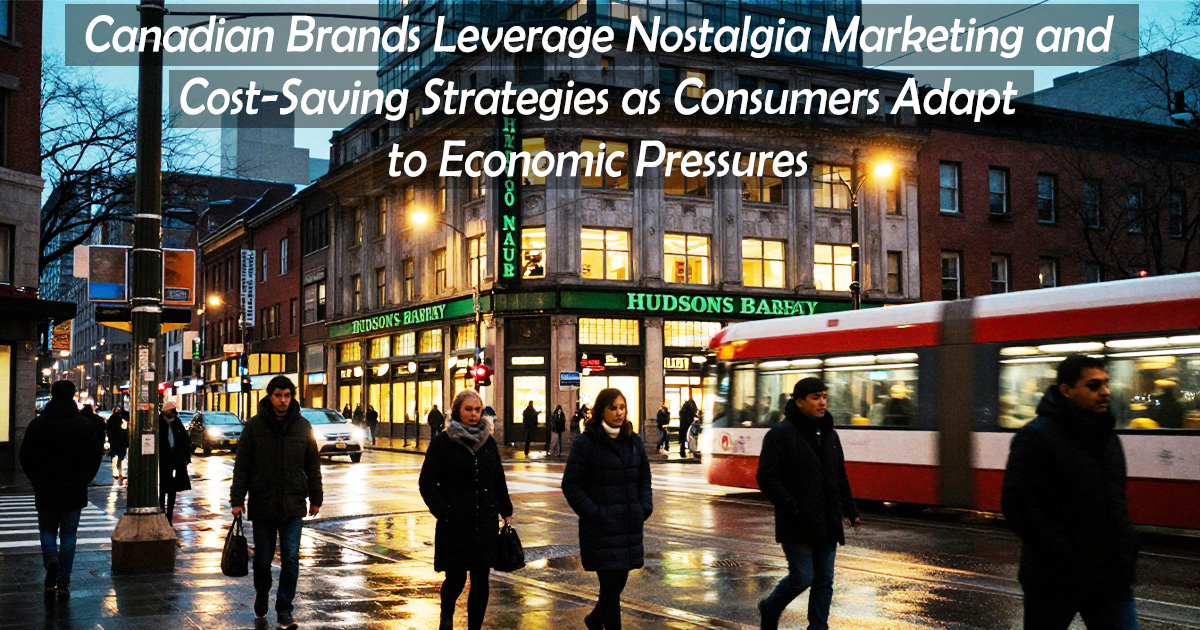
Canadian Brands Turn to Nostalgia and Straight-Up Savings as Household Budgets Tighten
The frozen juice is back.
No Name frozen juice concentrate is returning to Loblaw shelves after customers asked for it — the kind of Saturday-morning kitchen-counter staple that disappeared at some point in the 2000s.
It’s one tiny product. But it fits into a bigger shift. With inflation still a daily calculation for millions of households, companies from discount grocers to pizza chains to fintech startups are betting that a mix of nostalgia and straight-up savings will win over consumers whose trust has eroded and whose budgets have shrunk.
That strategy is a turn from premium branding to something more practical — and a little sentimental. A new analysis from Boston Consulting Group says Canadian consumers are not just spending less. They’re spending differently. And they’re angry.
How Nostalgia is Driving Brand Comebacks
A frozen staple returns
The choice to bring back No Name frozen juice concentrate, a product synonymous with 1980s and 1990s Canadian kitchens, was not a boardroom whim. Loblaw, the country’s largest grocery retailer, said customer feedback drove the decision. Shoppers asked for the item, and the company responded, seeing an opportunity to match nostalgia with its core No Name value proposition.
The combination is delicate, says University of Guelph marketing professor Rob McLean. “Nostalgia can be a powerful tool when a retailer sells Canadiana to Canadians,” McLean told U of G News in a 2023 interview. “But it can also feel shallow and opportunistic.” He was speaking specifically about the Zellers pop-up strategy inside Hudson’s Bay stores, but the caution applies to any company dusting off a dormant brand to appeal to shoppers’ memories.
He points out that nostalgia marketing works best when tied to a genuine experience, not just a logo slapped on a shelf. “Time will tell if this is more than a short-term nostalgia trip,” he said.
The reissue is low-risk. It’s one product, not a store-within-a-store, and it fits neatly into Loblaw’s discount architecture. The No Name label is a beneficiary of the trade-down trend BCG documented. In the firm’s survey, 37 per cent of Canadians said they plan to reduce consumption, especially in discretionary categories. Many are already swapping premium brands for cheaper ones.
Pizza chain ties orders to fuel savings

Fuel costs are a flashpoint, too. Outside major cities where transit is scarce, filling up the tank hits hard. Pizza 73, the Western Canada chain based in Edmonton, launched a promotion in early 2025: order pizza and get a rebate on fuel. It’s a straightforward pitch that acknowledges the twin squeeze of food and fuel inflation.
The promo gives customers a fuel rebate on qualifying orders. Straightforward: order pizza, save on gas. That message lands with consumers who still feel like prices are racing up, even as the official inflation rate eases toward the Bank of Canada’s two per cent target. BCG’s survey found the average Canadian thinks prices climbed 10 per cent over the past year. That perception gap shapes spending whether or not it matches Statistics Canada’s CPI.
Neo Financial targets cost-conscious consumers
Financial products are shifting too. Neo Financial, a Calgary-based fintech backed by prominent Canadian investors, has been adding features for consumers hunting for value and flexibility. Its product suite includes a high-interest savings account, a cash-back credit card, and a mortgage offering. It’s positioned as an alternative to the Big Five banks.
Neo’s growth coincides with deepening consumer scepticism toward banks, as BCG describes it. The firm’s survey found 34 per cent of Canadians feel more negatively about their financial institutions than three years ago. Grocery stores bore the brunt of consumer rage: 51 per cent expressed more negative feelings toward grocers. But banks haven’t been spared.
BCG’s analysis, led by managing director Trap Yates and senior partner Kathleen Polsinello, calls this moment a “consumer revolution.” The report says demographic change compounds economic pressures. By 2030, one-third of Canadians will be over 55 and another third will be foreign-born. The two segments whose sentiment has soured most: older consumers, often without wage growth to offset rising costs, and middle-income earners in the $75,000 to $200,000 range who’ve absorbed the brunt of declining housing affordability and high interest rates.
In Western Canada, energy prices and housing costs have swung wildly over the past two years, creating fertile ground for products that promise transparency and value. Pizza 73’s fuel rebate and Neo Financial’s no-fee banking pitch respond to the same data points BCG captured nationwide.
Trust becomes a competitive advantage
The common thread across a frozen juice can, a fuel rebate, and a savings account is trust. BCG’s report puts it bluntly: “Trust is emerging as the ultimate currency in Canada’s shifting consumer landscape.” Companies that demonstrate reliability and value, the authors write, stand to build a critical competitive advantage.

That insight resonates beyond groceries. Communications, retail, and financial services all face elevated suspicion from Canadians who think they’re paying more for less. Roughly 30 per cent of BCG’s survey respondents said quality has declined even as prices rose. That’s a dual grievance no marketing campaign can paper over.
The Zellers pop-ups inside Hudson’s Bay stores serve as a cautionary tale. Initial foot traffic surged on social media buzz and fond memories of Zeddy the bear and the “lowest price is the law” slogan. But sustaining interest meant offering a product mix and experience that felt authentic, not opportunistic. McLean’s warning about nostalgia feeling shallow applies to any brand mining sentiment without substance. Loblaw’s frozen juice concentrate is a smaller move, but it faces the same test. Will the product deliver enough value to stay on shopping lists once the initial wave of recognition passes?
CBC News and other outlets have documented a broader pattern of companies reintroducing discontinued products or reviving heritage branding, from snack foods to household goods. Social media campaigns invite consumers to share childhood memories. Marketing researchers call it “retro-branding,” and its success depends on whether the resurrected product meets the expectations memory has built up.
Deeper dives into consumer segments
BCG plans a series of reports digging deeper into the two segments with the greatest erosion of confidence: older Canadians and what it calls “insecure high earners.” They’ll examine purchasing patterns, channel preferences, and trust dynamics, offering a roadmap for retailers and service providers dealing with a population that’s aging, diversifying, and growing more skeptical.
The frozen juice concentrate hits shelves next month. It’ll cost $1.29 a can. And the average Canadian still thinks prices are up 10 per cent year-over-year. That number won’t budge for a $1.29 can of frozen concentrate, no matter how many memories it stirs.