UNIQLO, Pret, and Dunkin’ are expanding in Canada. Don’t mistake it for a retail boom.
UNIQLO is adding five stores. Pret A Manger is setting up shop inside airports. Dunkin’ says it will eventually open hundreds of doughnut-and-coffee outlets across the country. The headlines make it sound like Canadian consumers have money to burn. They don’t.
A lot of this is about cheap space. When Hudson’s Bay collapsed, it dumped 17 million square feet of retail onto the market — the equivalent of a dozen large shopping malls suddenly going dark. Landlords are now offering rent deals that make even cautious international brands take a second look. So here comes Japan’s biggest casual-wear chain, a British sandwich chain that has never operated in Canada, and a U.S. coffee giant that got chased out two decades ago. For them, this is not really about betting on a spending surge. It’s about filling a void.
UNIQLO and Pret arrive
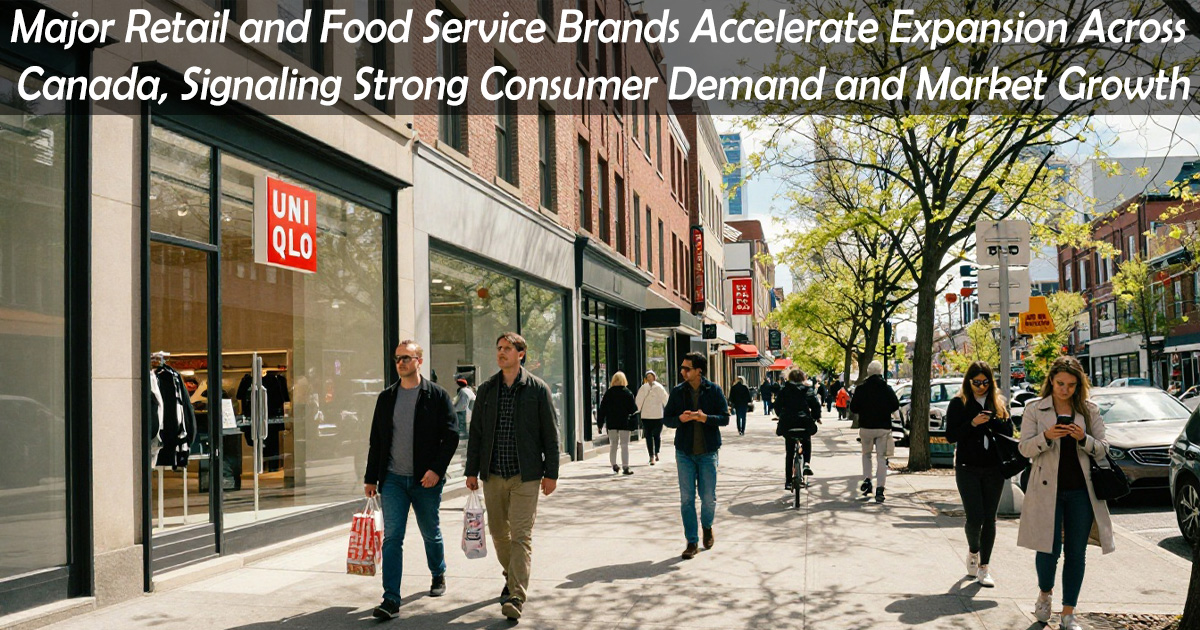
UNIQLO, which entered Canada in 2016, has always been picky about locations. Its 16 existing stores are concentrated in dense urban neighbourhoods, and the five new ones will follow that pattern — Toronto, Vancouver, Montreal, the kind of spots where foot traffic hasn’t collapsed. A company spokesperson said the first will open by September 2026. Quiet, steady. Not exactly a land rush.
Pret A Manger’s move is more creative. Through a deal with A&W Canada, the chain will open inside major airports, starting with Toronto Pearson in late 2026. Airports offer captive audiences: travellers stuck before flights, employees who can’t leave for lunch. The real estate risk is low, and the brand gets visibility among higher-income professionals who already know Pret from London or New York. For A&W, the tie-up gives its franchise network a new product to run alongside burgers and root beer. Smart. Not exactly a sign of boundless consumer confidence.
Dunkin’ tries again
Then there’s Dunkin’. The company wants “hundreds of outlets,” a senior official said, but that’s a decade-long ambition, not a near-term commitment. The first locations aren’t expected until late 2026 at the earliest. And Dunkin’ has already failed in Canada once. It pulled out of most of the country in the 2000s, leaving only a small Quebec presence. This time, it’s betting on drive-thrus in suburban power centres, going head-to-head with Tim Hortons, which has more than 4,000 restaurants and a loyalty you can’t just buy with a franchise agreement. I’m skeptical. You should be too.
Empty boxes and food courts
Cushman & Wakefield, the commercial real estate firm, just released its annual retail guide. The numbers aren’t terrible — Through November 2025, year-over-year retail sales were up 4.4 per cent — a nudge, not a surge.. But the real story in their data is where demand is coming from: food and beverage. Quick-service and fast-casual restaurants are the ones leasing space, not apparel or luxury. In Toronto, restaurants keep opening while clothing stores struggle. The 17 million square feet from Hudson’s Bay is a massive weight. Some of those anchor spaces will become gyms or entertainment centres, but many will stay empty for years.

The food inflation numbers don’t help. Statistics Canada says restaurant prices rose 8.5 per cent year-over-year in December. People are still eating out, but they’re trading down. That’s why fast-casual chains are expanding — it’s not a splurge story, it’s a substitution story.
A normalization phase
Cameron Martin, Cushman & Wakefield’s research manager for Canada, describes 2026 as a “normalization phase.” That is the analyst’s way of saying growth is disciplined, not booming. Interest rates are coming down, but household debt remains high and population growth is slowing because of federal immigration cuts. The retail expansion that does happen is careful, not euphoric.
The brands moving in are exploiting a landlord panic. When you have 17 million square feet to fill, you offer terms that make it hard to say no. Pret at the airport, UNIQLO in a handful of cities, Dunkin’ with that distant “hundreds” target — none of that adds up to a consumer boom. It’s just smart deal-making on cheap space.
Until those old Hudson’s Bay boxes get filled, the mall experience is going to look pretty hollow. The first Dunkin’ won’t open for at least another year and a half. By then, we’ll know if anyone actually wants it.