
Low-Income Bus Pass has become one of the most discussed public transit issues in Vancouver after another increase in TransLink fares. As transportation costs continue to rise, many residents are asking a simple question: Should affordable public transit be available to everyone, regardless of income?
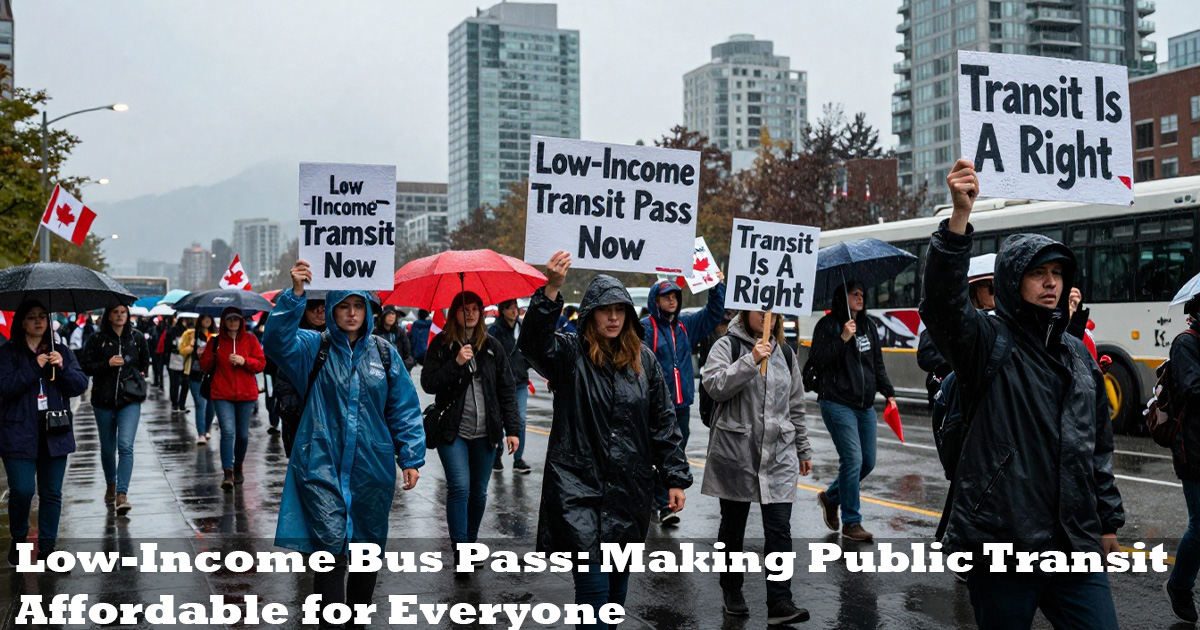
That question was at the center of a Canada Day rally outside the Vancouver Art Gallery. Around one hundred people gathered to urge the provincial government to introduce a Low-Income Bus Pass for working-age adults struggling with the rising cost of living.
For many people, public transit is more than just a way to travel. It is the connection to work, education, healthcare, and community. When fares increase faster than incomes, that connection becomes harder to maintain.
Advocates believe that introducing a Low-Income Bus Pass would make Vancouver’s transit system fairer, more accessible, and more inclusive for thousands of residents.

Why Transit Costs Are Rising
Public transit systems require significant funding to operate. Expenses such as fuel, electricity, maintenance, employee wages, infrastructure upgrades, and safety improvements continue to increase every year.
To help cover these costs, TransLink introduced another fare increase on July 1, raising prices by an average of five percent.
While the increase may seem modest on paper, it adds up over time. A commuter who regularly travels across three fare zones now spends more than $2,200 each year on transit passes alone.
For households already dealing with higher rent, grocery prices, and utility bills, transportation has become another major monthly expense.
Why Advocates Want a Low-Income Bus Pass
Transit advocacy group Movement believes affordable transportation should be treated as an essential service rather than a luxury.
During the Vancouver rally, Executive Director Denis Agar argued that Vancouver is one of the few major North American cities that still lacks a dedicated Low-Income Bus Pass for working adults.
According to the organization, commuters earning modest incomes often spend a significant share of their earnings simply getting to work.
This creates difficult choices every month.
Some people skip medical appointments.
Others avoid applying for jobs that require longer commutes.
Students may miss educational opportunities because transportation costs become too expensive.
Advocates argue that these are not transportation problems alone. They are economic and social challenges that affect entire communities.

Who Qualifies for Transit Discounts Today?
British Columbia already provides discounted transit through the BC Bus Pass Program.
However, eligibility is limited primarily to seniors over 60 and people receiving qualifying disability benefits.
While these programs provide valuable support, many working adults with low incomes do not qualify.
For example, someone earning a modest salary while working full-time may still struggle to afford monthly transit costs but receives no additional assistance.
This gap has become the main focus of the campaign for a Low-Income Bus Pass.
Supporters argue that eligibility should be based on household income rather than age or disability status alone.
Why Affordable Transit Matters
Transportation is one of the basic necessities of modern life.
Without reliable and affordable public transit, people can face barriers that affect nearly every part of their daily routine.
Affordable transit can help people:
- Reach work opportunities more easily.
- Attend school or college consistently.
- Access healthcare appointments without financial stress.
- Visit family and community services.
- Reduce dependence on personal vehicles.
When transportation becomes affordable, people gain greater independence and flexibility.
Many advocates describe a Low-Income Bus Pass as an investment rather than an expense because it helps residents participate more fully in the economy and society.
Studies from various cities have shown that affordable transit often supports employment, education, and overall quality of life while reducing transportation inequality.
Several major Canadian cities have already introduced programs that reduce transit costs for eligible residents.
Calgary operates a sliding-scale transit pass based on household income. The amount riders pay depends on their financial situation, making the program more accessible to people with limited incomes.
Toronto offers the Fair Pass Transit Discount Program, which reduces both single fares and monthly pass prices for qualifying residents. The initiative has helped many low-income commuters continue using public transportation despite rising living expenses.
These examples demonstrate that targeted fare assistance can be implemented without replacing existing transit systems.
Instead, they provide additional support to those who need it most while encouraging greater use of public transportation.