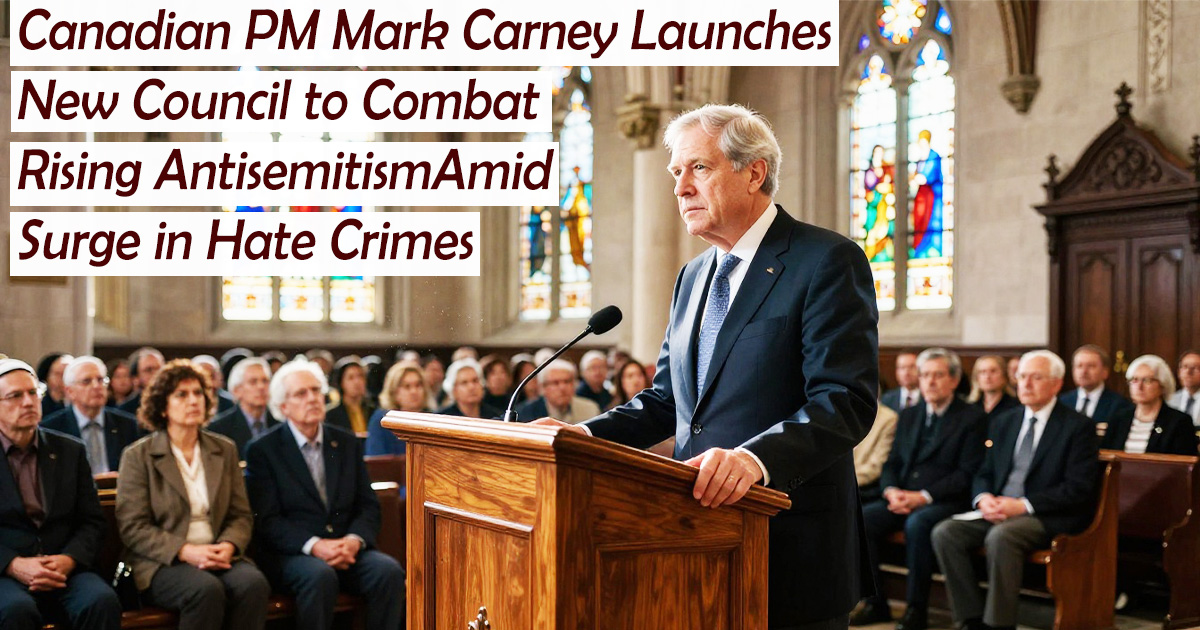
Canadian PM Mark Carney Launches New Council to Combat Rising Antisemitism Amid Surge in Hate Crimes
Jewish Canadians made up something like one per cent of the population last year, and they were the targets of nearly 70 per cent of all police-reported hate crimes motivated by religion. That’s the number Prime Minister Mark Carney brought to Holy Blossom Temple in Toronto on Monday, using it to anchor a new federal advisory council, a hike in security funding, and a promise to get tougher with the Criminal Code.
The Ministerial Advisory Council on Rights, Equality, and Inclusion will be chaired by Marc Miller, the minister of Canadian identity and culture, and it’s going to start by looking squarely at antisemitism. The original membership list is a mix of former senator Marc Gold, human rights advocate Martine Roy, Olympic champion Catriona Le May Doan, former Liberal cabinet minister Omar Alghabra, plus a lawyer, a social cohesion researcher, and a civil rights lawyer. Carney’s directive gives them a to-do list that’s both broad and impossibly quick: re-assess the scale and drivers of antisemitism across public institutions, workplaces, university campuses, and online spaces. Then develop a whole-of-government alignment of federal policies and community programs. Then push for better research and data collection so that school boards and police services are working from the same set of facts. Then measure whether the money spent on education, prevention, and security is actually doing anything. The first assessment is due within a year, but the machinery for all of this is just being assembled now.
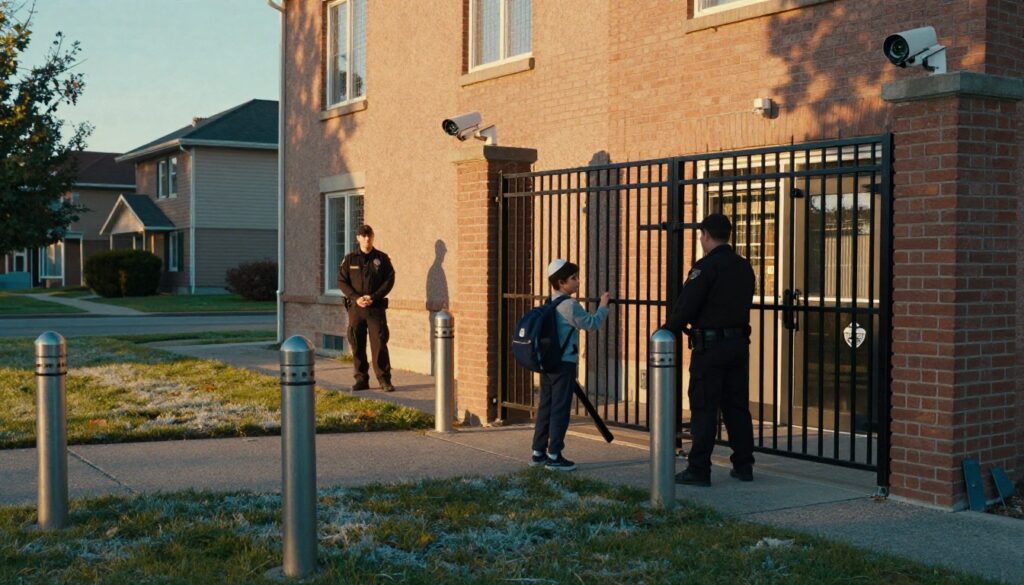
New money is already earmarked. The Spring Economic Update 2026 put an extra $75 million into the Canada Community Security Program, which is overwhelmingly used by Jewish congregations and schools for fences, cameras, security training, and sometimes guards. That’s on top of the $36 million announced last October for the Canada Centre for Community Engagement and Prevention of Violence, which funds early intervention in schools and counter-extremism work. The CCSP dollars are time-limited and the application process is a grind — anyone who’s dealt with it knows the lag between a threat and a new security gate can be measured in months, not weeks.
Also in the mix is Bill C-9, the Combatting Hate Act, which passed the House of Commons in March and is now before the Senate. It would create specific offences for intentionally blocking access to places of worship, schools, and community centres, and tighten some hate propaganda provisions. Carney cited a pattern of synagogue vandalism, threats against Jewish schools, Jewish students harassed on campus, and businesses targeted. He said the bill doesn’t constrict legitimate criticism of governments, pointing to the IHRA working definition Canada adopted in 2019, which he insists draws a line between political critique and hatred. But the Senate’s calendar is its own beast, and no debate has been scheduled yet.

And this is where the council’s work gets sticky. Hate crime policing falls largely to provinces and municipalities — local cops respond, lay charges, and feed numbers into the national Uniform Crime Reporting survey. The feds set criminal law and provide grants, but they don’t coordinate the street-level response. Carney’s council is supposed to bridge those gaps with what he calls “stronger data-sharing systems so all orders of government, schools, and police services are working from the same facts.” A senior official, on background, acknowledged that improving hate crime statistics would require voluntary buy-in from every province and territory, and the council’s membership was chosen partly to help unlock those doors. That is diplomacy, not enforcement.
The Jewish community has been asking for something more durable than episodic funding announcements. The $75 million is welcome, but the council’s measurement stream will be picked apart to see if it becomes permanent policy or another year-end press release. Carney’s speech was heavy on symbolism, and deliberately so. “Protection is fundamental, not sufficient,” he said. “The Jewish community must be able to flourish in every aspect of Canadian society.” It’s a fair line. But the test isn’t in Toronto on a Monday morning — it’s in whether the Senate moves on Bill C-9 before the election cycle distracts everyone, and whether the CCSP money actually reaches the congregations who are trying to decide if they can afford a guard for Shabbat services this fall.