
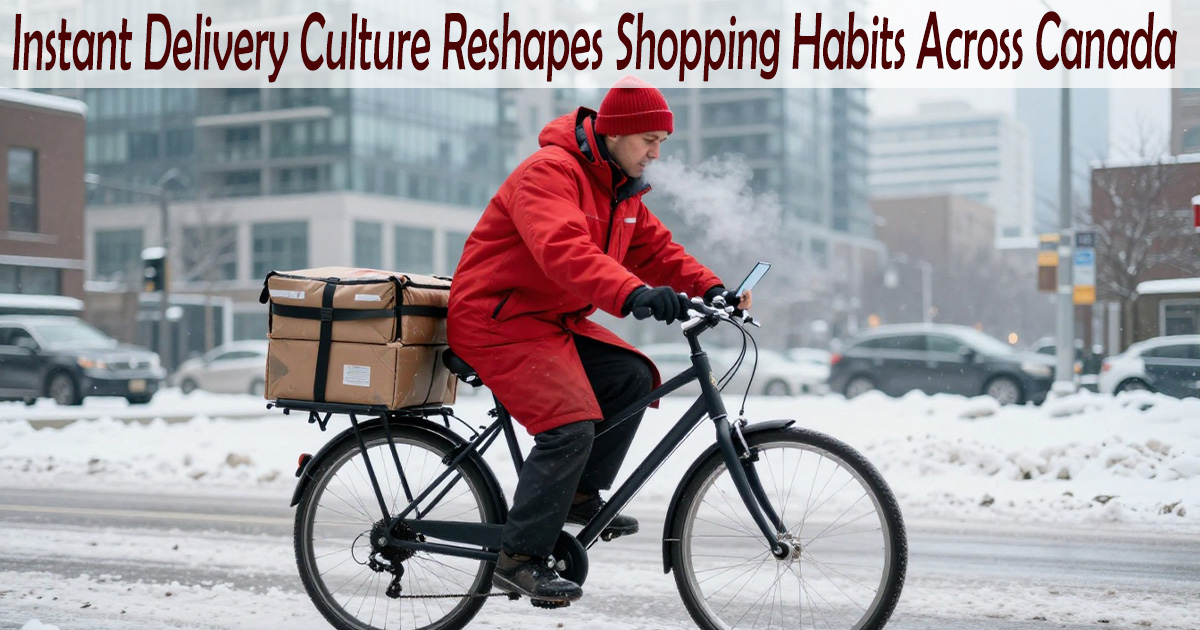
The hidden cost of Canada’s one-click shopping habit
Shopping has become a thumb workout. For millions of Canadians, same-day delivery — often within two hours in Toronto or Montreal — is no longer a premium perk but a basic expectation. The pandemic poured fuel on a trend that had been smouldering for years, and it hasn’t cooled. A 2024 analysis by logistics firm Flashbird found that 73 per cent of online shoppers now let delivery speed dictate where they click “buy,” and same-day options push conversion rates up by 25 per cent. “What was once a luxury has become essential infrastructure for Canadian cities,” the report said.
How delivery went from weeks to hours
Mail order once meant patience. A package could take a full business week to cross the country, moving at the speed of Canada Post’s trucks. Then Amazon Prime cut that to two days, and suddenly a week felt absurd. Today, three-hour delivery is routine in major cities. Some grocery orders arrive in 30 minutes. Each leap felt impossible until it wasn’t.
This new speed rests on a stack of technology that wasn’t widely available a decade ago. Route-optimization algorithms that recalibrate for live traffic. Phones doubling as dispatch terminals, handling navigation, proof of delivery, and customer chat. APIs that stitch a shopping cart directly to a courier’s system without human intervention. And predictive models that pre-position delivery vans where demand is about to spike. All of it invisible to the person tapping “order.”
Food Delivery Apps Reshape Canadian Eating Habits
What Shoppers Demand Now
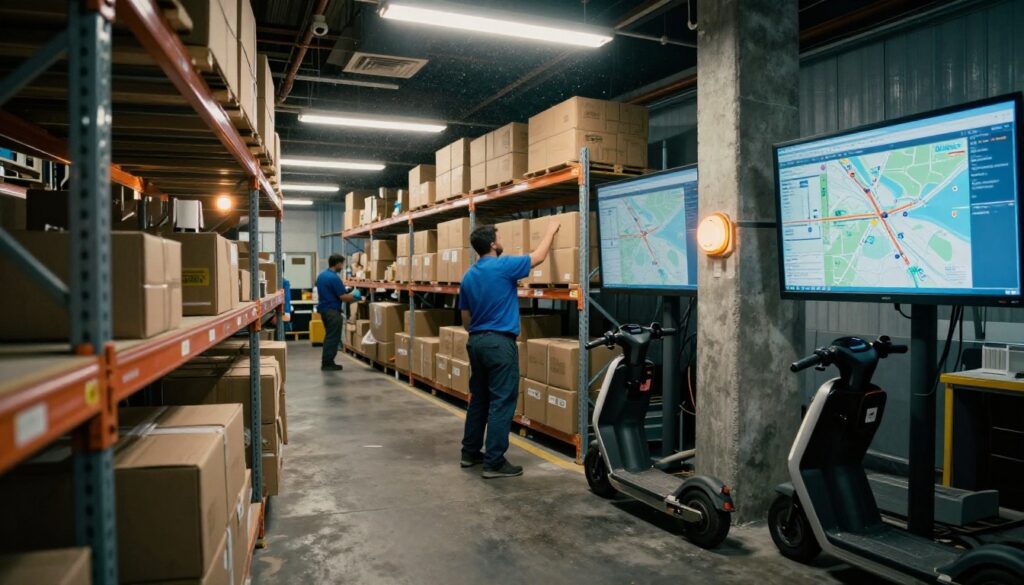
Canadians aren’t just impatient. The rise of Instant Delivery Culture in Canada has reshaped how consumers approach everyday purchases. A University of British Columbia study on digital retail noted that rising living costs have turned comparison shopping into a daily routine. People now hunt for the best combination of price, availability, and delivery speed as a matter of course, even for routine items. That same cost-consciousness is pushing them toward smaller direct-to-consumer brands that undercut big-box pricing while still shipping fast, reflecting the growing influence of Instant Delivery Culture in Canada.
In the grocery aisle, where loyalty once seemed fixed, the ground is shifting. Market research firm Mintel says about one-third of Canadian shoppers buy groceries online, though fewer than five per cent do most of their shopping that way. Nearly half of people under 40 have done it. Brand loyalty still exists — close to 90 per cent of Canadians participate in a loyalty programme and many pickup orders go to the same store they’ve always used. But that relationship is thinning. When an app offers the same cereal for 50 cents less and brings it in 20 minutes, the neighbourhood store starts to feel optional. This changing behavior highlights how Instant Delivery Culture in Canada is influencing purchasing decisions across all age groups.
Toronto, Montreal, and the Delivery Geography Problem
The app makes it look effortless. In Toronto, density makes rapid delivery viable, but the city’s verticality adds friction that no algorithm can smooth over. Couriers lose precious minutes navigating intercom codes, waiting for freight elevators, and deciphering which entrance faces the street. In Montreal, narrow cobblestone lanes and a winter that stretches from November to March mean drivers survive by knowing which laneways get plowed first and how to double-park on a sheet of ice without blocking ambulances. Quebec City’s compact core is efficient until the tourist crush hits and every alley clogs. These challenges demonstrate the real-world complexities behind Instant Delivery Culture in Canada.
City halls are playing catch-up. Toronto has tested cargo bike pilots to take some delivery vehicles off downtown streets. Montreal introduced loading-zone initiatives so couriers have a legal place to stop. All this tweaking signals a grudging acknowledgment that the instant-delivery genie isn’t returning to its bottle. But the infrastructure wasn’t designed for a fleet of gig workers in personal cars circling every 10 minutes. As Instant Delivery Culture in Canada continues to expand, municipalities are being forced to rethink urban logistics and transportation planning.

Who’s Footing the Bill for Speed?
The “last mile” — getting a parcel from a local depot to a doorstep — eats up as much as 53 per cent of total shipping costs, according to the Flashbird review. Companies are trying to blunt that expense with micro-fulfilment centres tucked into city neighbourhoods, crowd-sourced courier networks, cargo bikes, and parcel lockers in apartment lobbies. These solutions are becoming increasingly important as Instant Delivery Culture in Canada drives demand for faster and more efficient deliveries.
What that 53 per cent doesn’t capture is the human toll. The courier pays for gas and wear on a personal vehicle, and per-drop pay often dips below minimum wage once expenses are counted. One bad rating from a customer who didn’t hear the doorbell, and the algorithm cuts their shifts. For all the talk of frictionless commerce, the friction lands hardest on the people making the deliveries. Weather compounds everything: temperatures that hit minus 30, summer construction that chokes arteries, slush that freezes overnight. These challenges reveal the hidden costs associated with Instant Delivery Culture in Canada.
The Next Wave: Robots, Drones, and the Data Gamble
Pilot projects for sidewalk robots and drone deliveries are already running in a handful of Canadian communities. Electric delivery vans are becoming common in downtown cores. The industry’s next dream is predictive commerce: AI scanning your purchase history, guessing you’re about to run out of diapers, and moving a package to a nearby warehouse before you open an app. It sounds efficient until you remember that households aren’t that predictable, and a warehouse full of wrongly staged inventory is expensive. Even so, these innovations represent the future direction of Instant Delivery Culture in Canada.
A cargo bike pilot in downtown Toronto is racking up data points while a sidewalk robot sits stalled at a curb in Mississauga, waiting for a software patch. The delivery revolution is here. It still hasn’t figured out a Canadian February. Yet despite these obstacles, Instant Delivery Culture in Canada continues to evolve, shaping the future of retail, logistics, and consumer expectations nationwide.