anada vs Qatar: A Historic Night with Mixed Emotions
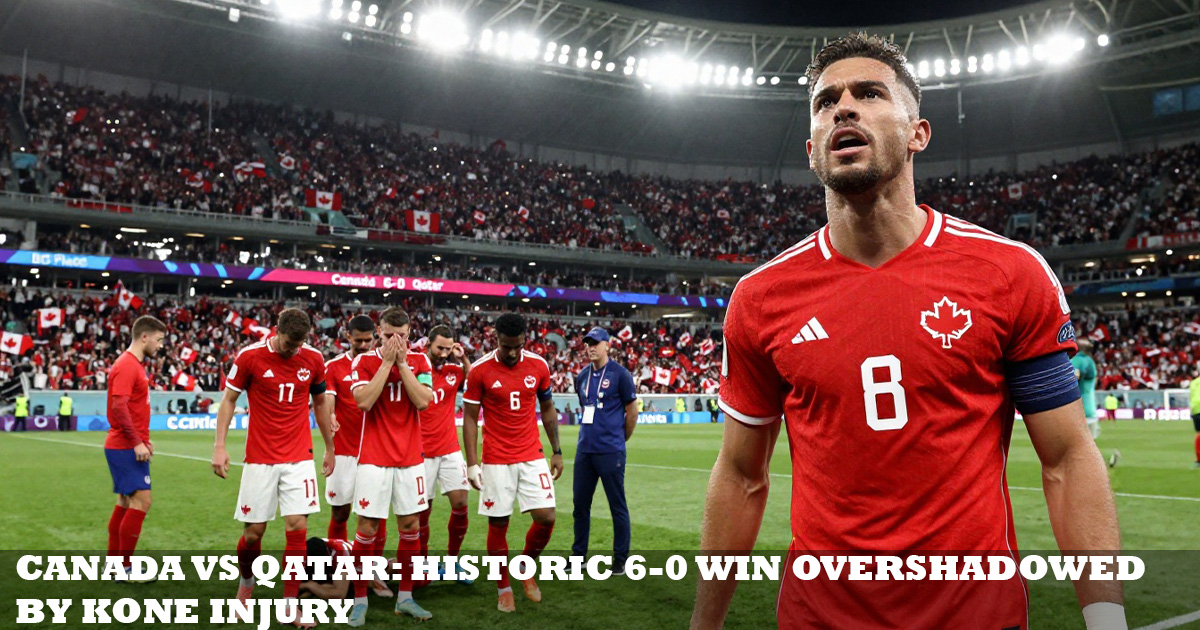
Canada vs Qatar was supposed to be remembered as the night Canadian soccer finally announced itself on the world’s biggest stage. Instead, a dominant 6-0 victory became a story of celebration and heartbreak unfolding at the same time.
In front of more than 52,000 passionate supporters at BC Place, Canada delivered one of the most convincing performances of the 2026 FIFA World Cup. The hosts scored six goals, broke records, and climbed to the top of Group B.
Yet the conversation after the final whistle centered on one moment.
Midfielder Ismaël Koné suffered a devastating leg injury that ended his tournament and cast a shadow over Canada’s biggest World Cup victory in decades.
The result was historic. The emotions surrounding it were far more complicated.
Canada vs Qatar: Canada’s Relentless Pressure Sets the Tone
From the opening minutes, Canada looked determined to control every aspect of the game.
Head coach Jesse Marsch deployed an aggressive pressing system that left Qatar struggling to find any rhythm. Whenever possession was lost, Canadian players immediately swarmed the ball.
The pressure was relentless.
Qatar’s defenders and goalkeeper had little time to think. Passing lanes disappeared. Mistakes quickly followed.
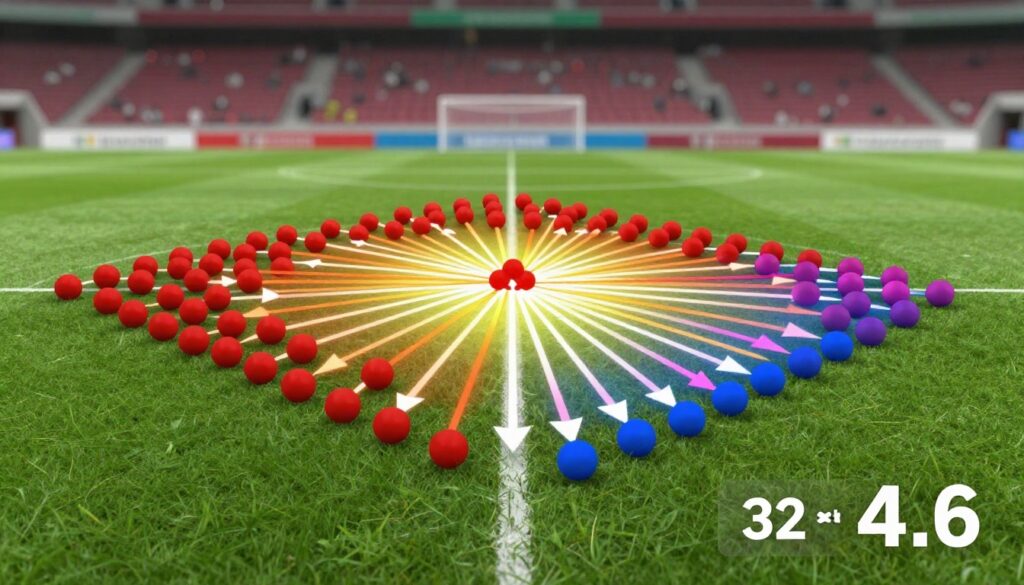
By the tenth minute, nearly every Canadian outfield player was positioned inside Qatar’s half. The hosts weren’t simply attacking—they were suffocating their opponents.
The strategy worked perfectly.
Canada created chance after chance while Qatar struggled to advance the ball beyond midfield.
Key signs of Canada’s dominance included:
- Constant high pressing
- Quick transitions after turnovers
- Strong possession in advanced areas
- Aggressive attacking movement
- Defensive discipline when out of possession
The numbers told the story. Canada registered 32 shots while Qatar barely threatened the goal throughout the match.
Canada vs Qatar: Cyle Larin Ends His Goal Drought
The breakthrough arrived in the 16th minute.
A forced turnover near Qatar’s penalty area created an opportunity for Cyle Larin, who wasted no time. His low strike beat the goalkeeper and gave Canada a deserved lead.
The goal meant more than just opening the scoring.
Larin had been searching for an international goal for nearly two years. Seeing the ball hit the back of the net was a significant confidence boost for both the striker and the team.
Canada continued attacking with confidence, sensing that more goals would follow.
They were right.
Canada vs Qatar Turns One-Sided After Red Card
The match became even more difficult for Qatar in the 33rd minute.
Homam El Amin brought down a breaking Tajon Buchanan and received a straight red card.
Playing with ten men against Canada’s energetic attack was always going to be a huge challenge.
The dismissal effectively changed the game.
Canada enjoyed more space, more possession, and more opportunities. What had already been a dominant performance quickly became complete control.
By halftime, the hosts looked capable of scoring whenever they pushed forward.
Canada vs Qatar: The Injury That Changed Everything
The defining moment of Canada vs Qatar came shortly after the second half began.
In the 53rd minute, Ismaël Koné received the ball near midfield and accelerated forward.
Qatar’s Assim Madibo launched into a high challenge.
The contact was immediate and severe.
Madibo’s studs struck Koné’s standing leg, causing a serious injury that was visible to everyone inside the stadium.
Players from both teams reacted instantly.
Medical staff rushed onto the field while teammates looked on in shock. The atmosphere inside BC Place changed completely.
Koné was eventually stretchered off after receiving treatment.
Despite his pain, he managed to give supporters a reassuring thumbs-up gesture.
It was a moment that reflected both his courage and his connection with the fans.
Madibo received a red card, but the damage had already been done.
Kone’s World Cup was over.
Canada vs Qatar: Jonathan David Delivers a World-Class Performance
While emotions remained high, Canada still had a match to finish.
Jonathan David ensured the team maintained its focus.
The striker produced one of the finest performances of the tournament.
His first goal came after reacting quickest inside the penalty area. The finish was simple but effective.
His second showcased excellent positioning and composure, arriving just before halftime.
The third completed a memorable hat-trick.
Meeting a cross with a precise header, David secured his place in Canadian soccer history.
His movement consistently caused problems for Qatar’s defense. Defenders struggled to track him, and every attacking run seemed dangerous.
David’s hat-trick achieved several important milestones:
- First Canadian World Cup hat-trick
- One of the tournament’s standout individual performances
- A major boost in the Golden Boot race
- Further proof of his world-class quality
On a night filled with emotion, David provided the clinical finishing Canada needed.
Nathan Saliba’s Emotional Tribute
One of the most memorable moments came from substitute Nathan Saliba.
Introduced after Koné’s injury, Saliba scored a stunning free kick from outside the penalty area.
The strike curled beautifully into the corner.
Yet it was the celebration that captured hearts.
Instead of celebrating normally, Saliba formed the number eight with his fingers, representing Kone’s shirt number.
He then held up Kone’s jersey toward the crowd.
The gesture immediately resonated with supporters.
It was a reminder that football is about more than goals and victories. It is also about friendship, loyalty, and standing together during difficult moments.
What Canada vs Qatar Means for Group B
The victory dramatically improved Canada’s position in Group B.
After drawing their opening match against Bosnia and Herzegovina, the six-goal win moved them to the top of the standings.
The enormous goal difference could prove crucial as the group stage progresses.
Benefits of the result include:
- First World Cup victory in decades
- Leadership of Group B
- Significant goal-difference advantage
- Increased confidence heading into the next match
- Strong momentum before the knockout stage
Canada now controls its own destiny.
A positive result against Switzerland could secure first place and provide a favorable path into the knockout rounds.
Can Canada Replace Ismaël Koné?
This is now the biggest question facing Jesse Marsch.
Koné’s influence extends beyond statistics.
He provides energy, creativity, ball progression, and leadership in midfield. His ability to drive forward with possession makes Canada significantly more dangerous.
Replacing those qualities won’t be easy.
Several players could be asked to take on larger roles:

Stephen Eustáquio
A proven leader capable of controlling tempo and organizing midfield play.
Nathan Saliba
His goal showcased confidence, but replacing Koné’s overall influence remains a major challenge.
Samuel Piette
Offers defensive stability and experience in high-pressure situations.
Canada still possesses attacking talent capable of troubling any opponent. However, tournament football often comes down to midfield control.